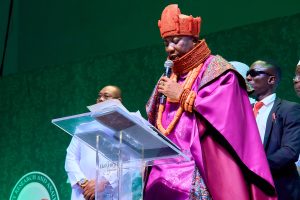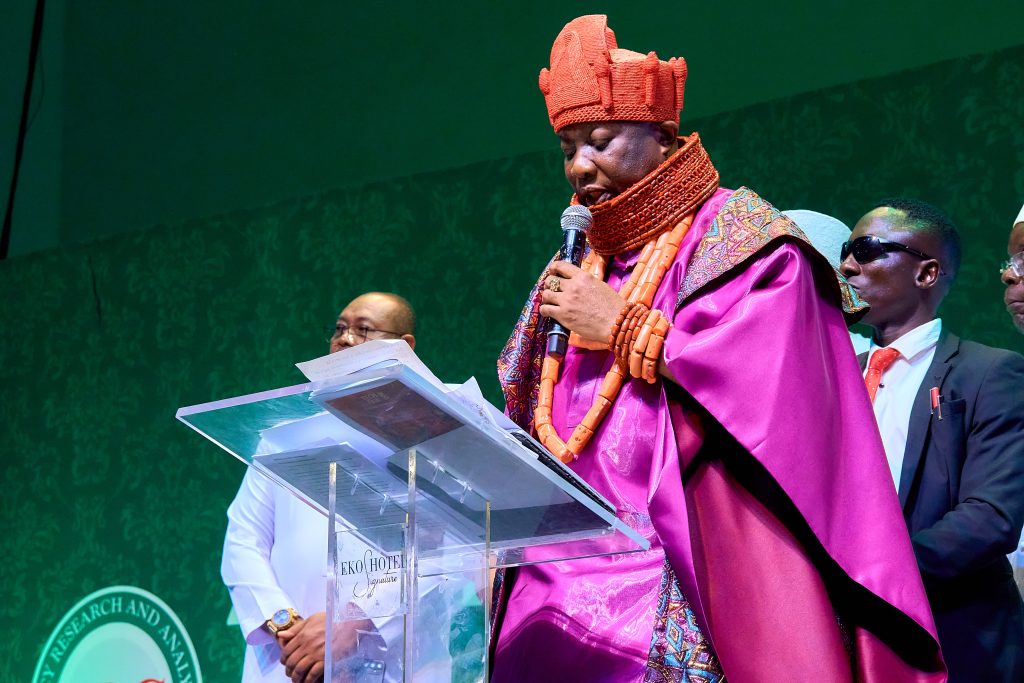
Address by His Royal Majesty Professor Epiphany Chukwuemeka Azinge, SAN on Sunday, 16 November 2025, at Eko Hotels & Suites, Victoria Island, Lagos.
Your Excellencies, Awardees, Members of the Advisory Board of the Public Policy Research and Analysis Centre (PPRAC), Distinguished guests, ladies and gentlemen and all lovers of excellence gathered here tonight – good evening.
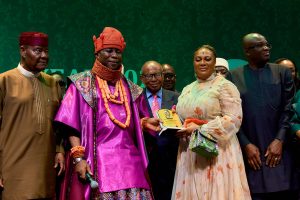
It is with deep humility and great pride that I stand before you tonight as Chairman of the 2024/2025 Zik Prize in Leadership Awards Ceremony. As the Asagba of Asaba, keeper of our heritage, and a Senior Advocate of Nigeria, I have seen leadership rise and fall across Africa. Yet tonight, we are not just watching—we are building a lasting legacy, a light to guide generations to come.
Allow me to extend my deepest gratitude to PPRAC for the honour of chairing this event, and to you, our esteemed guests, for gracing this event with your presence. Together, we honour not just individuals, but the enduring spirit of Africa.
The Zik Prize, instituted in 1995, is more than an award; it is a covenant with history. Named after Dr. Benjamin Nnamdi Azikiwe, Zik of Africa, the Owelle of Onitsha, journalist, statesman, and the undisputed architect of Nigerian nationalism who symbolises the unyielding quest for excellence in public life.
Zik was not just a leader; he was a philosopher-king whose pan-African vision transcended borders, languages, and tribes. Zik’s life was a tapestry woven from the threads of unity, intellectual rigor, and unapologetic boldness. His pan-African leadership qualities were forged in the furnace of colonial oppression and tempered by a profound belief in the in-divisibility of the Black race.
Consider, if you will, Zik’s foundational role in the National Council of Nigeria and the Camerouns (NCNC), where he championed the cause of the oppressed from Lagos to London. His editorship of the West African Pilot was no mere journalistic endeavor; it was a clarion call for self-determination. He founded the African Continental Bank to drive indigenous economic empowerment and established Nigeria’s first university at Nsukka with the immortal motto: “To restore the dignity of man.” Zik’s Pan-Africanism was not abstract rhetoric but lived praxis. He co-founded the Nigerian Youth Movement, mentored Kwame Nkrumah, and stood shoulder-to-shoulder with Julius Nyerere and Haile Selassie at the Addis Ababa Conference of 1963, birthing the Organization of African Unity, his vision of a united Africa.
Zik taught us that true leadership is borderless, that the liberation of one African is the liberation of all. In an age of fragmentation, his insistence on “One Nigeria, One Destiny” reminds us that our strength lies in our shared humanity. In salute to traditional consciousness, the Great Zik of Africa humbly accepted the title Owelle of Onitsha, bridging modern nationalism with ancestral wisdom. Tonight, as we confer this Prize, we invoke Zik’s spirit: a leader who wielded the pen as a sword, the ballot as a bridge, and the podium as a pulpit for progress.
Yet, as we celebrate this legacy, we cannot ignore the shadows that loom over our dear nation. Nigeria, the Giant of Africa, stands at a crossroads, its potential eclipsed by persistent economic, political, and leadership challenges that test the resilience of our collective will. Economically, we grapple with a paradox: the petroleum sector, once our golden goose, contributes a mere 5.8% to GDP while commanding 90% of exports and 65% of federal revenue. This over-reliance has left us vulnerable to global oil price volatility and its attendant challenges.
The way forward lies in reclaiming Zik’s blueprints renaissance of ethical, innovative, and inclusive leadership. Economically, we must diversify beyond oil: harnessing our 200 trillion cubic feet of gas reserves for LNG exports, investing massively in renewables to end the 4,000 MW power deficit, and operationalizing the African Continental Free Trade Area to boost non-oil exports by 30% by 2030. Agro-industrial hubs, like those emerging in Enugu and Osun, can create millions of jobs, while digital economy policies – fintech, e-governance – could add substantially to GDP. Politically, we need constitutional reforms: devolving more powers to states.
Leadership must evolve from transactional to transformational, mentoring youth through academies and Leadership Institutes, enforcing anti-corruption via asset declaration portals, and fostering bipartisanship to heal divides. The Southeast’s reintegration demands deliberate inclusion: equitable appointments, infrastructure equity, and dialogue.
Nationally, fiscal federalism, increased derivation and state police will empower regions. Education must be the great equalizer: increased budget allocation, STEM focus, and vocational training for millions of youth annually. Healthcare reforms, ward-based centers, and universal insurance will save lives and trillions. Security requires community policing, AI surveillance and youth engagement.
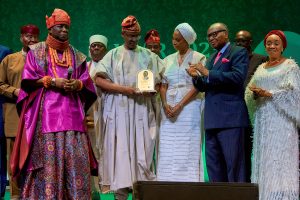
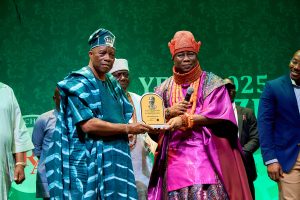
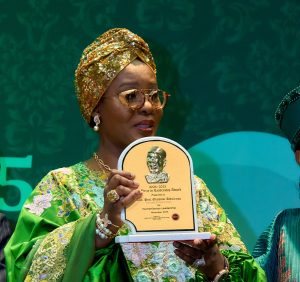
Tonight, we spotlight those who walk this path – our awardees, beacons of Zik’s ideals. In Good Governance, H.Es. Dr. Peter Mbah and H.E. Sen. Ademola Adeleke exemplify bold execution with their pragmatic reforms restoring faith in public service. Dame Winifred Akpani, in Entrepreneurial Leadership, built Northwest Petroleum from scratch to a pan-African powerhouse. Mr. Bolaji Balogun, in Professional Leadership, orchestrated Africa’s landmark $1.67 billion telecom exit, advised on the 2008 Banking rescue and champions SDG-aligned finance at Chapel Hill Denham. And Her Excellency. Prof. Olufolake Abdulrazaq, in Humanitarian Leadership, through Kwara’s Ajike Center, empowers thousands with health equity and skills.
May this Zik Prize ignite a fire across Africa – economic vitality, political harmony, leadership renewal.
Thank you, and God bless Africa.